
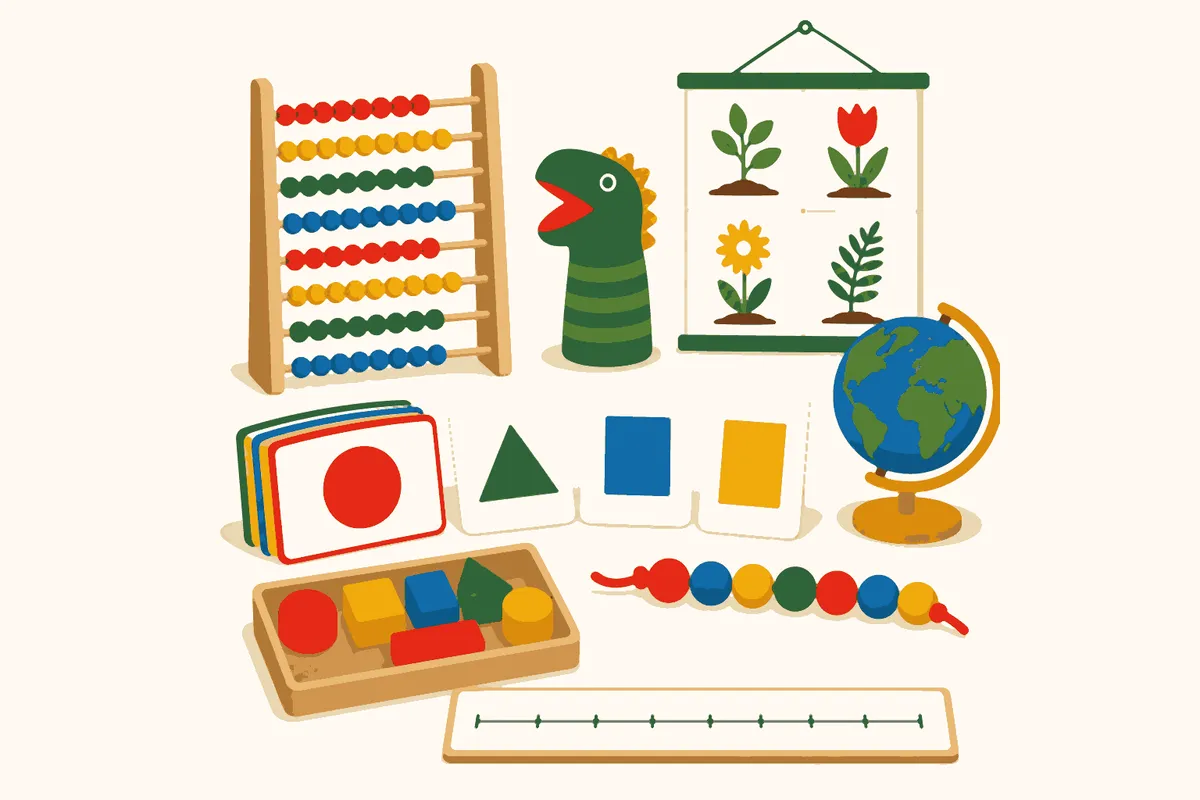
For a young child, the idea of “more” becomes easier to discuss when there are real counters to move; a letter can be seen, traced and matched with its sound. A useful aid gives a concept a form children can notice and handle, rather than asking them to understand an unfamiliar explanation alone.
Well-chosen materials can invite children to look, listen, touch, move, compare and talk. These different points of contact can support attention and recall, while play and conversation give children time to make sense of what they notice. An aid supports the interaction; it does not replace a responsive adult or a child’s own exploration.